
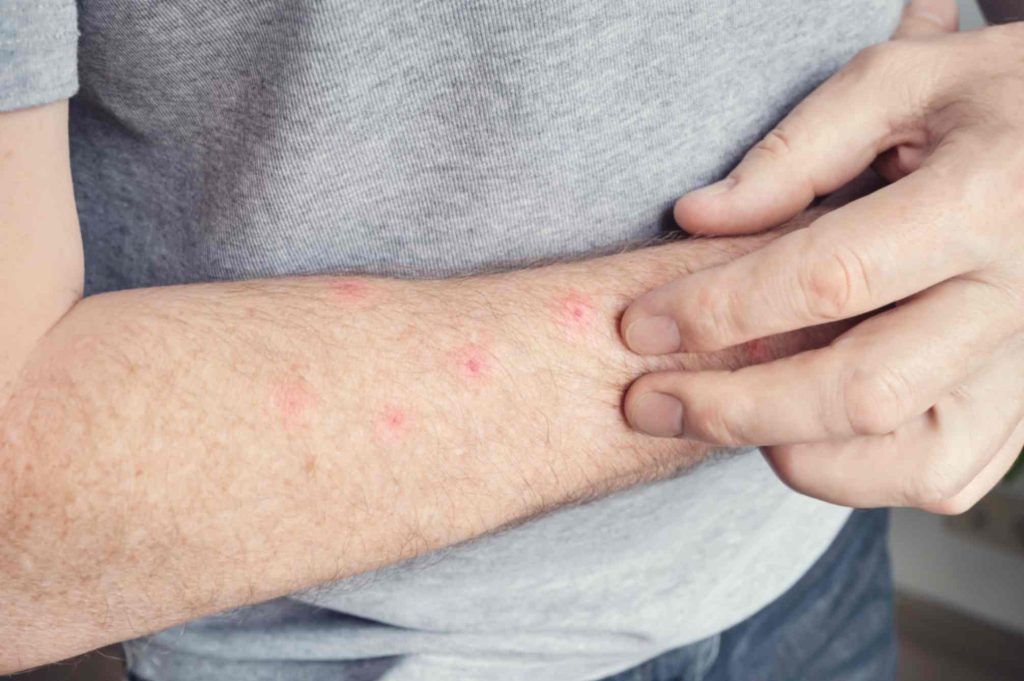
Most insect bite swelling can be reduced within a few hours with a cold compress, an antihistamine, and by keeping the affected area still and slightly raised. This simple insect bite swelling treatment can ease discomfort while the body responds to the saliva or venom introduced by the bite. For most people, the swelling settles within a few days without needing to see a GP.
Why Do Insect Bites Cause Swelling?
Swelling happens because the immune system releases histamine when it detects foreign proteins in an insect’s saliva or sting. This causes the redness, heat, and puffiness around a bite. NHS guidance confirms this reaction is usually harmless and improves within a few hours to a few days, though itching can last up to ten days according to NICE guideline NG182.
How to Reduce Swelling from an Insect Bite
The fastest way to reduce swelling is to cool the area, keep it elevated, and avoid scratching while it heals. A few simple steps make a real difference in the first 24 to 48 hours.
Cold Compress and Elevation
A cold compress calms the inflammatory response and eases discomfort quickly. Wrap ice or a cold, damp flannel in a cloth and hold it against the bite for 10 to 15 minutes at a time. Where possible, raise the affected limb to reduce fluid build-up.
Antihistamines and Soothing Creams
Oral antihistamines and topical hydrocortisone cream may help ease itching and swelling for some people, though NICE notes there’s uncertainty over how effective antihistamines are for this specific use. A pharmacist can recommend the most suitable option based on your age and medical history.
What to Avoid
Try not to scratch the bite, even if it is very itchy, as this can damage the skin and increase the risk of a secondary infection. It is also best to avoid hot baths or showers immediately after a bite, as heat can make swelling worse. Unproven home remedies are best avoided too.
When Insect Bite Swelling Signals an Allergic Reaction
Most insect bites cause a small, local reaction, but some people can have a more serious allergic reaction that needs urgent attention. Be particularly aware of swelling that spreads well beyond the bite or affects the face, lips or throat.
Seek urgent medical help or call 999 if you notice:
- Swelling of the face, mouth, or throat
- Difficulty breathing or wheezing
- A fast heartbeat, dizziness, or fainting
- A widespread rash or hives
These can be signs of anaphylaxis, which is a medical emergency. If mosquito bite swelling becomes worse after a few days, feels hot, or starts to ooze pus, it should also be checked. These changes can point to an infection rather than a normal bite reaction.
Get Help With an Insect Bite That Is Not Settling
If you need insect bite treatment in Hedgerley or insect bite treatment in East Burnham, Aroga Pharmacy in Farnham Common offers fast, professional care within easy reach of both areas, without the wait for a GP appointment. We provide the NHS Pharmacy First service for infected insect bites, giving eligible patients free same-day assessment and treatment, plus advice on antihistamines, creams, and safe self-care.
If swelling is not settling or looks infected, book an appointment with Aroga Pharmacy today. Our pharmacists are here to give you clear advice and the right treatment so you can get back to feeling comfortable again.
Frequently Asked Questions
How long does swelling from an insect bite last?
Most insect bite swelling peaks within a day or two and clears within a week. Redness and itching can occasionally linger for up to ten days before fully settling.
What is the fastest way to reduce swelling from an insect bite?
A cold compress applied for 10 to 15 minutes, combined with elevating the area and taking an antihistamine, brings down swelling fastest in the first 24 hours.
Is it normal for a mosquito bite to swell a lot?
A larger, itchy swelling known as skeeter syndrome is a mild allergic reaction some people get to mosquito saliva. It looks alarming but usually settles within a few days with cold compresses and antihistamines.
When should I worry about an allergic reaction to an insect bite?
Seek urgent help if swelling spreads to the face, lips, or throat, or if you develop difficulty breathing, dizziness, or a widespread rash, as these can signal anaphylaxis.
Can I put ice directly on an insect bite?
No. Always wrap ice or a cold pack in a cloth or flannel before applying it, as direct ice contact can damage the skin.
Should I see a pharmacist or a GP for a swollen insect bite?
A pharmacist is usually the right first port of call and can offer treatment, including free NHS Pharmacy First care for infected bites. A GP is only needed if symptoms worsen significantly or you become unwell.