
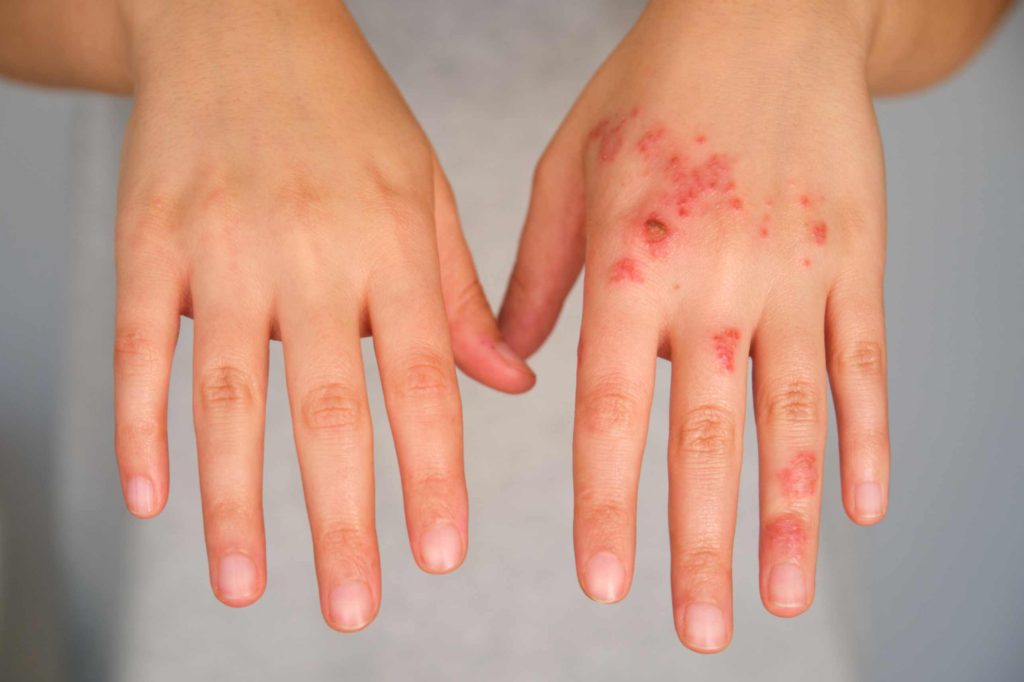
Impetigo looks like small red sores that quickly burst and dry into a distinctive golden or honey-coloured crust, most often around the nose and mouth. It’s one of the most recognisable childhood skin infections, although adults can get it too. Knowing what impetigo looks like can help you spot it early, get the right treatment and reduce the chance of it spreading to others.
What Are the Signs of Impetigo?
The most obvious signs of impetigo are red, itchy sores that ooze fluid before drying into a honey-coloured crust.
- Small red sores, usually around the nose, mouth, hands or limbs.
- Sores that burst and leak clear fluid or pus.
- A golden or honey-coloured crust forming over the sore.
- Itching, though the sores are not usually painful.
What Are the Stages of Impetigo?
Impetigo usually goes through a few recognisable stages, starting with a small red spot or blister before becoming a crusted patch as it heals.
- A small red papule or blister appears on the skin.
- The blister fills with fluid and quickly bursts.
- The area oozes and forms a wet, red patch.
- A honey-coloured crust develops and gradually flakes away as the skin heals.
A less common form, bullous impetigo, causes larger fluid-filled blisters that take longer to burst and can come with a mild fever.
Impetigo Symptoms in Adults vs Children
Impetigo symptoms in children usually appear around the nose and mouth, while in adults they can develop after an existing cut, insect bite or skin condition.
| Characteristic | Children | Adults |
| Most common age | 2 to 5 years old | Any age |
| Usual cause | Close contact at nursery or school | Broken skin, eczema, or contact with an infected child |
| Common sites | Face, around the nose and mouth | Anywhere, often the limbs or hands |
How Is Impetigo Diagnosed?
Impetigo is usually diagnosed just by looking at the rash. The honey-coloured crust is distinctive, so tests aren’t normally needed.
A pharmacist or GP will examine the sores and ask how long they’ve been there. Swabs are only taken in specific situations, such as when the infection keeps coming back or treatment hasn’t worked.
What Is the Treatment for Impetigo?
Impetigo treatment depends on how widespread the infection is. Mild, localised cases may be treated with hydrogen peroxide cream, while more widespread or bullous impetigo may need oral antibiotics.
- Hydrogen peroxide cream for localised, mild impetigo.
- A short course of topical antibiotic cream if hydrogen peroxide isn’t suitable.
- Oral antibiotics for widespread or bullous impetigo.
- Good hygiene, such as not sharing towels, to stop it spreading.
Where Can You Get Impetigo Treatment?
You can get impetigo treatment at Aroga Pharmacy through the NHS Pharmacy First service, without needing a GP appointment.
Our pharmacists can check whether the rash is consistent with impetigo, confirm whether you’re eligible for NHS treatment and supply the appropriate treatment, whether that’s a cream or an antibiotic, where clinically suitable.
Need Help With Impetigo in Hedgerley?
If you’re looking for impetigo treatment in Hedgerley or nearby, don’t leave a worsening rash unchecked. Aroga Pharmacy provides NHS Pharmacy First consultations from our pharmacy in Farnham Common, where our team can assess your symptoms and advise on the right treatment.
Book your consultation today and get the advice and treatment you need with as little fuss as possible.
Frequently Asked Questions
What does impetigo look like in the early stages?
It starts as a small red sore or blister, which quickly bursts and oozes before drying into a golden or honey-coloured crust over the next few days.
What are the main impetigo symptoms to watch for?
The main symptoms are red, itchy sores that burst, ooze fluid or pus, and form a honey-coloured crust, most often around the nose and mouth.
Are impetigo symptoms different in adults compared to children?
Impetigo is more common in children and usually appears around the face, while in adults it more often follows a cut, insect bite or existing skin condition and can appear anywhere on the body.
Is the impetigo rash painful?
Not usually. Non-bullous impetigo, the most common type, tends to be itchy rather than painful, though bullous impetigo can cause more discomfort along with a mild fever.
How is impetigo diagnosed?
Impetigo is diagnosed by examining the appearance of the rash, since the honey-coloured crust is distinctive enough that lab tests are rarely needed.
How do I book impetigo treatment in Hedgerley?
You can book a Pharmacy First consultation with Aroga Pharmacy, based in Farnham Common and serving Hedgerley and nearby areas, by phone or through our website.